
Skip to content

Dizziness and Balance: How Vision Plays a Vital Role

Imagine trying to navigate a grocery store when, all of a sudden, a dizzy spell hits. The room starts to spin and you lose your balance. You struggle to stand up straight, your vision becomes blurred and orienting yourself in your surroundings becomes insurmountable. To those with vertigo and balance problems, performing simple daily tasks — such as grocery shopping — can feel defeating.

Maintaining proper balance is complex and relies on the collective, healthy functioning of three separate systems: the inner ear, muscle-joint feedback, and vision. Ongoing research suggests that there may be a relationship between a heightened risk of falling and poor vision.

If you experience frequent dizzy spells and difficulty maintaining your balance, make an appointment with Verdant Vision Center to rule out any visual dysfunction that could be at the root of the problem.
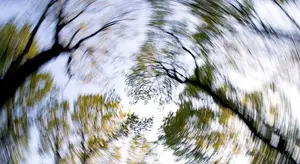

A filtered photo of trees with a spiral effect that seems to be taken from the bottom of the trees.

How Does Vision Affect Balance and Dizziness?

A good sense of balance depends on your ability to see where you are in relation to your surroundings as well as where certain key body parts are in relation to the rest of the body. This information is received by receptors in the muscles and joints but also implicates vision.

The most important visual skill needed to maintain balance is binocular vision, which is the eyes' ability to work together in creating a clear and unified view of the world around you. The visual system helps regulate the other systems involved in maintaining balance, this means that any defect in the visual system can lead to frequent falls and a balance disorder.

Visual dysfunctions that cause blurred or double vision are common in balance disorders, but can also be its root cause. By improving your vision functionality, you could significantly improve balance and diminish the frequency of dizzy spells.

We Treat Visual Dysfunctions To Improve Balance and Reduce Dizziness

To get to the root of the condition and to assess its connection with vision, our doctor will evaluate a wide range of visual skills, such as oculomotor skills, eye teaming and tracking, focusing, visual processing, and how well the brain interprets visual information.

If a visual dysfunction is detected, a fully customized neuro-optometric rehabilitation program will be provided to treat the visual components contributing to the balance disorder. With the patient's participation and diligence, the visual skills and abilities can be improved over time.

Woman holding her head in pain and smiling with a blurry background

What Is Neuro-Optometric Rehabilitation Therapy?

Neuro-optometric rehabilitation therapy, a form of vision therapy, enables those suffering from visual problems to retrain the brain and eyes to regain functionality and quality of life. This therapy uses a variety of methods and techniques to train both eyes to work as a team. It is made up of individualized exercises, which, when done over a period of time rehabilitate visual, perceptual and motor disorders, thus helping the patient regain balance. This effectively reduces or resolves symptoms of dizziness, vertigo, and lack of balance.

The neuro-optometric rehabilitation program offered at Verdant Vision Center can help detect and treat the underlying vision problem causing your dizziness and balance issues.

If you've tried other types of therapies and still experience dizziness and balance problems, it's time to see what we can do for you. Start your journey to recovery by contacting Verdant Vision Center and schedule your appointment today.

Inner Ear

The inner ear provides crucial signals about the position and movement of your head, helping the brain determine spatial orientation.

Muscle-Joint Feedback

Receptors in muscles and joints relay information about body position and movement, working alongside the vestibular and visual systems.

Vision

The visual system helps regulate balance by telling the brain where you are relative to your surroundings. Any defect in vision can lead to frequent falls and balance disorders.

Find Relief From Dizziness and Balance Problems

Verdant Vision Center serves patients from Hot Springs and surrounding areas. Contact us today to schedule your appointment and start your journey to recovery.

Our Doctor

Optometrist
"Hello and thank you for visiting our page! I am Dr. Bailey, the nearly fearless leader (no heights please), owner and optometrist of Verdant Vision Center. I have been practicing since...
Office Manager, Optician
"Hi! I'm Samantha. I have been an optician for 10 years and my love of helping patients find the perfect frame grows with every exciting new pair! When I'm not...
Insurance Specialist
"My name is Pattie. I am the insurance specialist here at Verdant Vision. I am originally from southern California where I was born and raised. I spent 15+ years in Environmental...
Optometric Technician
"Hullo! I'm Cortney, optometric technician and receptionist. I'm proudly from Arkansas's Delta region. I have a Master of Public Administration and I genuinely care for all our patients. Outside the...
Optician
"Hey Heyyy! My name is Amber and I'm winking at success one blink at a time. I am the newest of the crew, and upcoming optician, here at Verdant Vision...

Visit Us

monday:
9:00 am - 4:30 pm
tuesday:
9:00 am - 4:30 pm
wednesday:
9:00 am - 4:30 pm
thursday:
9:00 am - 4:30 pm
friday:
9:00 am - 12:00 pm
saturday:
Closed
sunday:
Closed