Skip to content

Vision Therapy in Hot Springs

Could Your Child Benefit with Vision Therapy?

Is your child not reading at grade level? Is your child not performing to their potential at school?

Does your child have any attention difficulties or dislikes homework?

Undetected visual problems may be keeping your child from performing well in school.

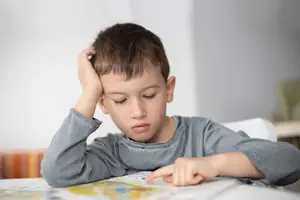
A boy is sitting in a chair with his head on his hand and his other hand pointing to a book on the table.

What Is Vision Therapy?

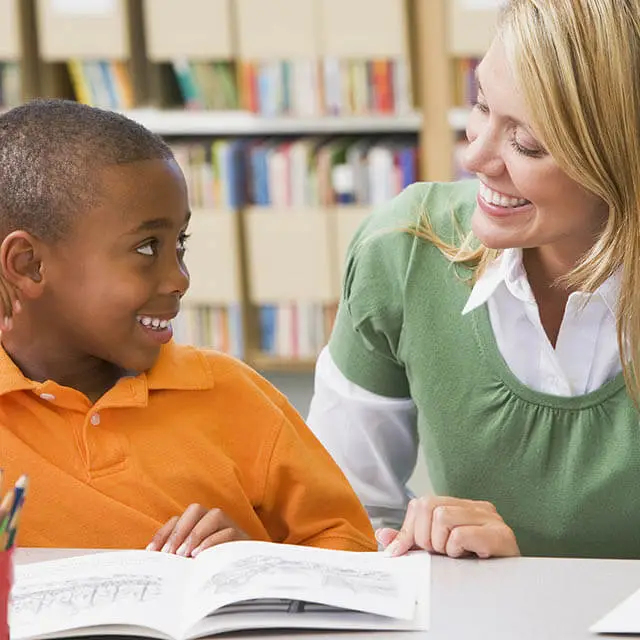
A woman smiles while looking at a boy reading a book in a classroom.

20/20 vision is but ONE of over 17 important visual skills required to function efficiently to perform well in school or sports.

Children with reduced vision skills may work harder than their peers, yet be unable to achieve the results they seek. Their poor vision skills may also cause them to struggle to concentrate throughout the day.

Vision therapy is an evidence-based program to effectively strengthen the specific vision skills impacting your child and has been clinically proven to increase reading levels, enhance comprehension, maintain longer attention spans and even improve sports performance.

See a difference in your child's school performance!

If your child has been diagnosed with a reading or learning difficulty or just not reaching their potential at school, or on the sports field, schedule an appointment for a functional eye exam. Over 17 visual skills will be assessed, including eye tracking, reading fluency, focusing and depth perception.

Don't let your child suffer in silence.

Vision therapy might just be the solution you have been seeking. Talk to us! We'll help your child maximize their visual skills and resolve any underlying visual problems impacting your child.

How To Know If Your Child Needs Vision Therapy

Boy covering his face with his hand in a forest

If your child has any of the following, vision therapy can significantly change his or her life for the better.

  • Skipping words or lines while reading
  • Still not reading at grade level
  • Confusing the letters b, d, p and q
  • Rubbing eyes or closing one eye when reading or doing near work
  • Holding books too closely or tilting head when reading
  • Eyestrain or headaches with schoolwork or computer use
  • Difficulty with reading comprehension
  • Blurred or double vision when reading
  • Avoiding homework
  • Poor attention span
  • Fidgeting and squirming in the chair

Help Your Child Reach Their Potential With Vision Therapy

At The Vision Therapy Center at Verdant Vision Center we use a holistic approach to vision care. In addition to the usual eye exam, we also test the entire visual system (functional vision exam) to check that it has the developmental maturity, strength, and stamina to function optimally throughout the visual tasks performed on a daily basis.

Once we identify any vulnerable areas within the visual system that could interfere with reading and learning, we develop an effective vision therapy regimen made of individually-tailored eye exercises made to improve visual functions and retrain the brain to interpret visual input more accurately.

Contact The Vision Therapy Center at Verdant Vision Center today for a functional eye exam, or visit us with your concerns regarding your child's vision, and we'll be sure to find the best way to treat his or her visual problems.

A woman in a white sweatshirt and denim shorts is kneeling in a grassy field with a young boy wearing a light colored hoodie and blue shorts. The woman is holding the child's arm and kissing his cheek.

What Parents Are Saying About Us

Vision Therapy May Be What Your Child Always Needed | FAQ

Improve your child's confidence levels with vision therapy!

Vision therapy is a non-surgical treatment program that is typically compared to physical therapy, but for the eyes and brain. Vision therapy uses exercises, lenses, specific instruments, and occlusions to enhance visual function.

All vision therapy programs are customized and can result in significant lasting improvements within a relatively short period of time. To learn more, contact us today and discover how we can help your child improve their performances both in school and on the sports field.

A family of four in a living room with a woman in a white lab coat shaking hands with a man holding a girl and a woman holding a folder and a pen.

Explore Vision Therapy Topics

Person writing on paper with a pen on a wooden table.
Have your child take our quiz to discover if he/she has functional vision issues that stand in the way of his academic achievement and quality of life.
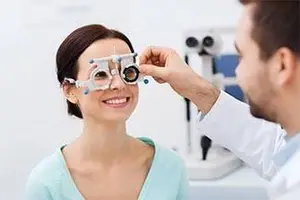
An eye doctor checking the patient's vision
Children with undetected vision problems can struggle with reading and writing, which can adversely affects their studies and quality of life. Read on to find out the ways a developmental optometrist can help.
Blonde-haired girl lying on white floor, smiling, and looking at the camera with her hands on her cheeks
Amblyopia or “lazy eye” is a neuro-developmental vision condition that begins in early childhood.
A smiling girl holding her hands on her cheeks in front of a table with plants and a cake.
Studies show that children with vision problems are twice as likely to be diagnosed with ADD or ADHD as compared to their peers. Learn how vision therapy can help [maximize] your child's visual skills to reach their full potential.
A young boy in a blue shirt and yellow polka-dot tie stands outside, carrying a backpack and smiling for the camera
Amblyopia, commonly referred to as Lazy Eye, occurs when the brain and the eye are not working in unison, resulting in decreased vision in an eye that otherwise seems healthy. The only treatment available which treats the amblyopia and not just the symptoms is Vision Therapy, also called Development Optometry.
woman with long black hair looking upward in a dark room with blue light
Syntonic phototherapy (light therapy) uses visible light frequencies (color) to improve visual attention and decrease any symptoms associated with various eye problems. This therapy benefits those with double vision, eye strain and fatigue, headaches, reduced peripheral vision, and more.  
A girl with brown hair and blue eyes wearing glasses
Keep Up-To-Date with our Vision Therapy Blog!
A smiling boy in a hat holding a soccer ball outdoors
Good vision is so much more than 20/20. A vision screening measures visual acuity only but does not uncover vision deficiencies, such as poor focus or tracking problems, convergence insufficiency, and other essential functional vision skills. These can have a profound effect on your child’s learning abilities and overall success in life.
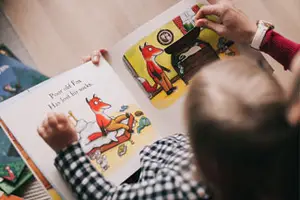
A young child is sitting on the floor reading a book with a person holding the book open and pointing to a picture of a fox.
By training the eyes and brain to seamlessly work together, vision therapy effectively treats visual dysfunctions that interfere with a child’s reading and learning abilities.
A baby lying on a fluffy white carpet with its hands up and eyes wide open
Strabismus, also known as an “eye turn” or “cross-eye”, is a condition [characterized] by the improper alignment of the eyes. Vision therapy effectively treats this condition by teaching the brain and eyes to work together to correct the eye misalignment and thus achieve clear and comfortable vision.
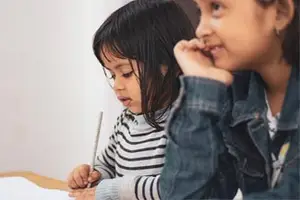
Two young girls sitting at a desk, one writing and the other watching.
Children often struggle with learning and sports as a result of undiagnosed vision problems — most commonly Convergence Insufficiency (CI). CI has been shown to affect a child’s reading ability, attention and overall school performance. Learn how vision therapy can treat this condition thereby leading to more success in school, work and in sports.